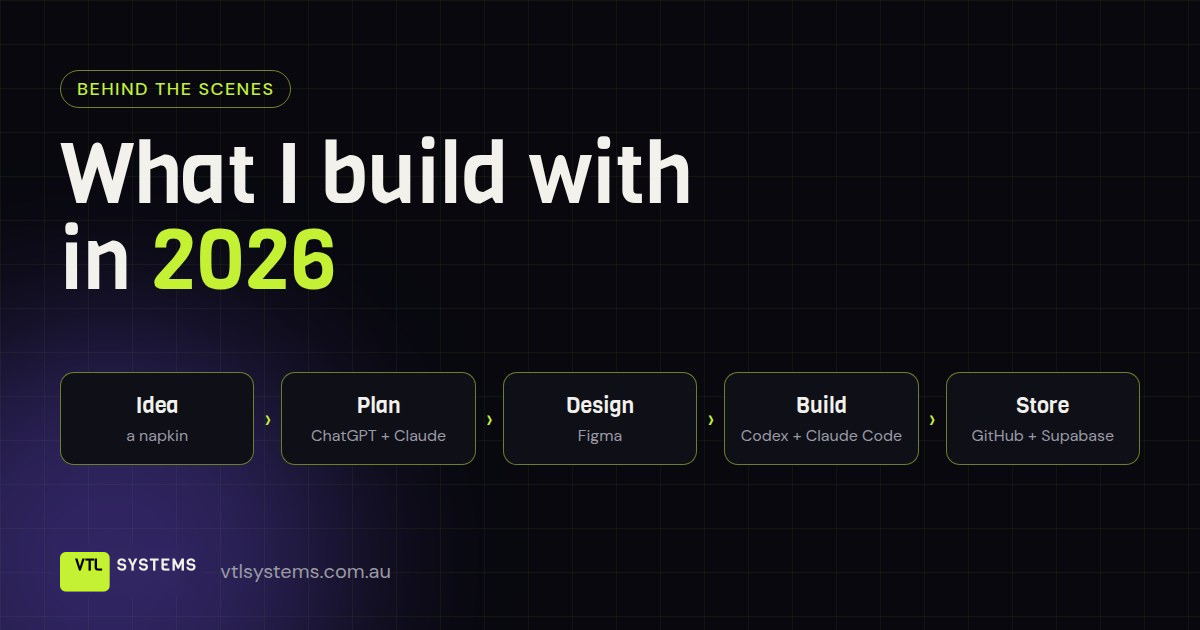
People keep asking what I build with, usually right after I mention I can ship a simple site in a week. The short answer is "too many tabs". The slightly longer answer is below. No affiliate links, no sponsorships, just the stuff that is open on my machine right now.
ChatGPT and Claude: the idea and planning engines
Every build starts here, before any code. Talking an idea through, picking it apart and turning it into a plan is where the chat apps shine. Claude Code and Codex can do this too, but the chat apps are better suited to discussion and brainstorming. Nothing gets built until the idea has survived an argument.
Claude Code vs Codex: my coding team
IYKYK. Claude Code is the quiet, overeager engineer. The output is polished, it's to the point and it just gets the job done. The catch: now and then it takes a passing suggestion or comment as an instruction and does the work anyway, without anyone asking. Then you have to reel it back in a little.
Codex is the team player and allrounder: part artist, part storyteller, part designer. It can do almost everything, sometimes talks a bit too much and is always on your side. That's the catch too. When you want an unbiased opinion or some push back, you only get it if you ask explicitly.
So which one do I use? Both, for different things. Three months ago I would have said Claude Code for most jobs, because the output was more polished and it seemed to know what I wanted and gave better suggestions. Lately Codex has become the better allrounder and it's now my daily driver. Maybe that's OpenAI's models improving a lot in recent months. Cost helps too: Codex is included on every ChatGPT plan, even the free one, while Claude Code needs a paid Claude plan. In my experience the Codex allowance also goes a lot further.
End of the day, the workflow is much the same on both. I describe what I want, argue about how it should work, then it writes code while I do the important job of having opinions and drifting into another idea. It's a programmer that never gets tired, never needs a coffee run and never says "well, in my experience" before being wrong. When the output isn't to my satisfaction or I'm starting to pull my hair out, I ask the other guy for a second opinion. It can take some back and forth, but you learn which one suits which kind of project, just like colleagues: some people simply do some jobs better.
With my own projects, this site was built in Claude Code and Grain Hero was built in Codex. (As of October 2026. Ask me again in three months.)
Supabase: the memory
Postgres, auth, storage and real-time without me hand-rolling any of it. Almost every app I build needs logins and a database, and Supabase is the part where I stop worrying. Grain Hero runs on it. Most things with users in them end up on it. It is Postgres wearing a very good trench coat.
The supporting cast
- GitHub: the repo. Everything is in there, including the commits I would rather not discuss.
- Next.js, TypeScript and Tailwind: the web stack. Next.js builds the site or app, TypeScript catches mistakes before they ship and Tailwind handles the styling.
- React Native, Expo and SwiftUI: for phones. React Native and Expo build iPhone and Android apps from one codebase. SwiftUI is Apple's own toolkit for fully native iPhone apps. TestFlight handles the testing.
- Figma: wireframes and UI/UX design. See it before we build it.
- Hosting: I have a preferred setup for live sites, and there are others depending on the project.
How it all fits together
The loop is boring on purpose. Idea on a napkin. Plan it with ChatGPT or Claude until it stops being vague. Sketch it in Figma. Build in small chunks with Claude Code or Codex and get the other one to have a look. Push to GitHub. Preview it for the client. Put the data in Supabase. Fix the thing the client notices that nobody else did. Ship.
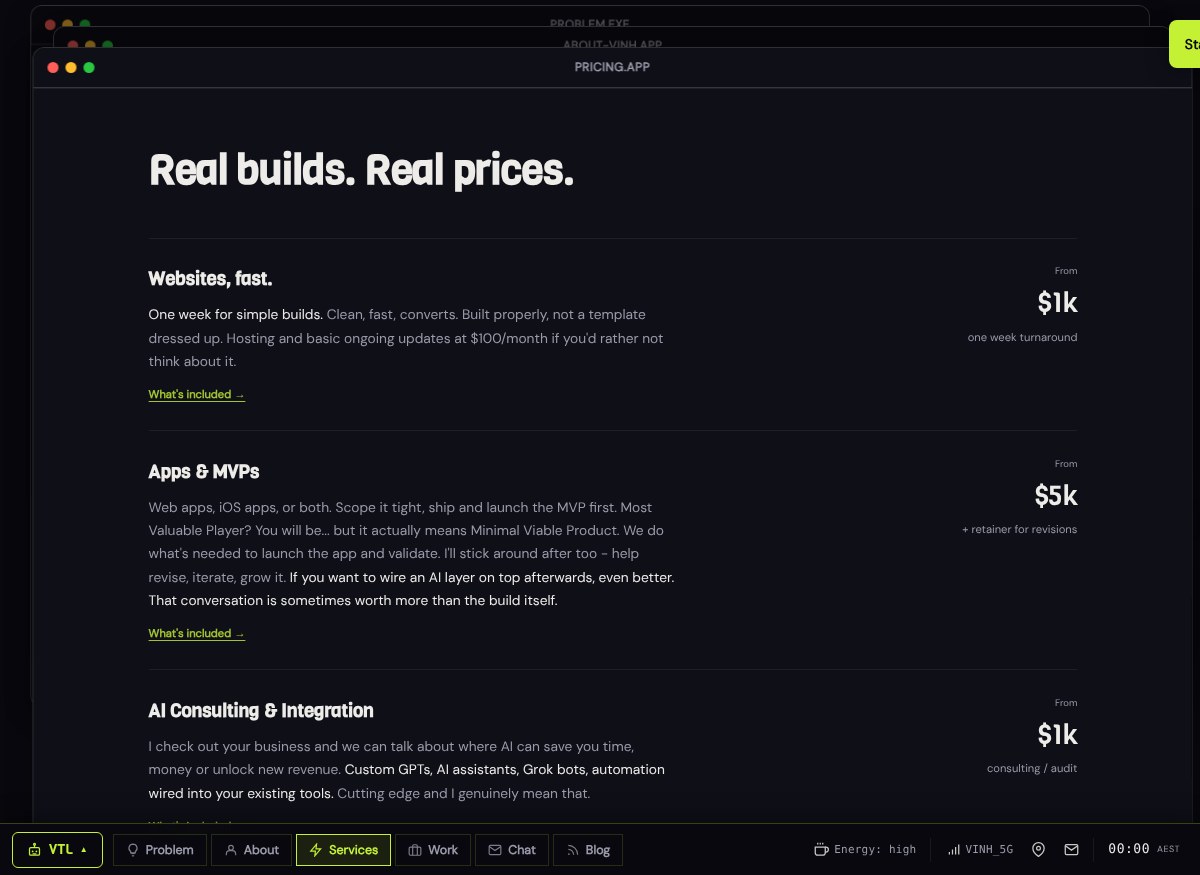
That screenshot is this site in its VTL OS mode, which exists because I got bored and had the tools to make it happen. That is the real change in 2026. Building is cheaper and faster than it has ever been. Deciding what is worth building, and for whom, is still the expensive part.
If you have an idea and want someone to turn it into something real, send me a brief. I read them all myself.